
When it comes to the best boxes for moving books, packing up a whole collection can be more challenging than you might expect. Although books seem simple to pack, their weight adds up quickly, making boxes heavy and increasing the risk of damage during transport. Choosing the best boxes for moving books and using proper packing techniques will make your move safer, faster, and much more organized.
Whether you’re relocating your home, heading off to university, or transporting a personal library, selecting the best size box for moving books is essential. This guide covers the ideal box size, proven packing methods, and tips for choosing the most reliable book boxes for moving.
Why Choosing the Right Book Box Matters
Books are among the heaviest household items when packed together. While large boxes might seem convenient, they quickly become too heavy to lift safely. On the other hand, boxes that are too small mean more trips and extra packing time.
The best moving boxes for books should support heavy loads without collapsing, be easy to carry and stack, protect your books from damage, maximize available space in your moving vehicle, and help you save time when packing and unpacking. Investing in quality book packing boxes can save time and money—and keep your collection safe.
- Support heavy loads without collapsing.
- It is easy to carry and stack.
- Protect your books from damage.
- Maximize available space in your moving vehicle.
- It helps you save time when packing and unpacking.
Investing in quality book packing boxes can save time and money—and keep your collection safe.
What Is the Best Size Box for Moving Books?
One of the most common questions is: What’s the best size box for moving books?
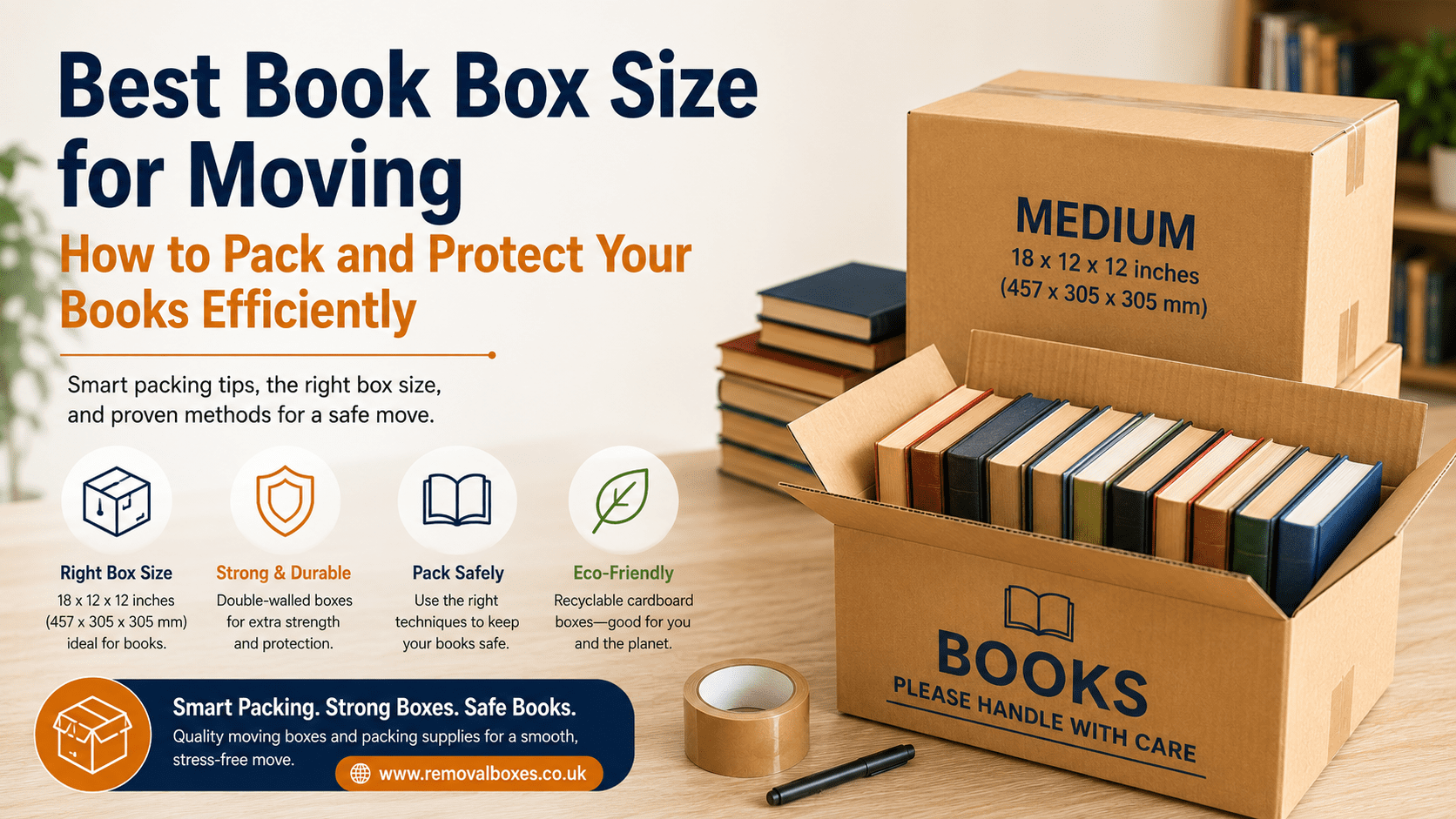
A medium-sized box is almost always the best choice. Look for boxes that measure roughly 18 x 12 x 12 inches (457 x 305 x 305 mm). This provides the perfect balance between capacity and portability. It’s large enough to fit several books but still manageable for one person to lift. This size helps prevent overloading, which can cause boxes to break or become too difficult to move.
Medium-sized boxes are widely considered the best boxes for packing books because they’re strong enough to handle the weight without becoming unwieldy.
Why Double-Walled Boxes Are Recommended
Not all cardboard boxes are created equal—especially when you’re moving heavy items like books. Double-walled cardboard boxes, which have two layers of corrugated board, are much stronger than regular single-wall cartons.
Double-walled book packing boxes offer greater weight capacity, better protection from crushing, improved stacking strength, and reduced risk of splitting. This makes them especially durable for long-distance moves. If you’re moving valuable books, textbooks, hardcovers, or collectors’ editions, double-walled boxes provide extra peace of mind that your collection will stay safe.
- Greater weight capacity
- Better protection from crushing
- Improved stacking strength
- Reduced risk of splitting
- Extra durability for long-distance moves
If you’re moving valuable books, textbooks, hardcovers, or collectors’ editions, double-walled boxes give you extra peace of mind.
How Many Books Fit in a Moving Box?
How many books fit in a moving box depends on their size and thickness. As a rule of thumb, a standard medium-sized box can typically hold about 25–35 paperbacks or books, or 20–30 hardback books, or about that many. Don’t overfill boxes—even if there’s still room inside, always consider the total weight so each box stays light enough for one person to carry safely.
- 25–35 paperback books
- 20–30 hardback books
- Or a mix of different sizes
It’s important not to overfill boxes—even if there’s space left, consider the total weight. Each box should still be comfortable for one person to lift.
Best Way to Pack Books for Moving
Choosing the right moving boxes for books is just the first step. Proper packing ensures your books stay safe and organized. Pack books either flat, with the largest on the bottom, or upright as you would on a shelf—but avoid placing them with the spines facing up, as this can damage the bindings. Fill the box’s empty spaces with packing paper, bubble wrap, or soft clothing to prevent books from shifting or getting damaged. Always reinforce the bottom of each box with high-quality packing tape before filling it. Finally, clearly label each box by genre or room—such as “Fiction,” “Non-fiction,” “Children’s books,” “Office books,” or “Fragile/valuable editions”—to make unpacking much easier.
Pack Books Flat or Upright
- Place books flat, with the largest on the bottom.
- Or pack them upright, as you would on a shelf.
- Avoid packing books with spines facing up, as this can damage the bindings.
Fill Empty Spaces
- Use packing paper, bubble wrap, or soft clothing to fill any gaps.
- This prevents books from shifting and getting damaged.
Use Strong Packing Tape
- Reinforce the bottom of each box with high-quality packing tape before filling it with books.
Label Every Box
- Clearly label boxes by genre or room, such as “Fiction,” “Non-fiction,” “Children’s books,” “Office books,” or “Fragile/valuable editions.”
- Good labeling makes unpacking much easier.
Cardboard vs Plastic Book Storage Boxes
Many people consider both cardboard and plastic containers for moving books. Cardboard boxes are usually the best choice for moving books because they are lightweight, cost-effective, easy to recycle, available in many sizes, and easy to stack in moving vans. Although plastic containers provide water resistance, they tend to be heavier and more expensive. For most moves, strong cardboard moving boxes offer the best balance of protection and value.
- Lightweight
- Cost-effective
- Easy to recycle
- Available in many sizes
- Easy to stack inside moving vans
Plastic containers offer water resistance but are often heavier and more expensive. For most moves, strong cardboard moving boxes offer the best balance of protection and value.
How Many Book Boxes Do You Need?
If you’re wondering how many book boxes for moving you’ll need, here’s a simple guide: about 100 books will usually fit into 3–4 medium boxes; 250 books take 8–10 medium boxes, and 500 books will need 15–20 medium boxes. Buying your moving boxes for books in bundles or as part of a moving pack is usually more affordable, and having all your supplies ready ahead of time makes the packing process much smoother.
- About 100 books = 3–4 medium boxes
- About 250 books = 8–10 medium boxes
- About 500 books = 15–20 medium boxes
Buying boxes in bundles or moving packs is often more economical—and getting all your supplies together can help simplify your move.
Where to Buy the Best Boxes for Moving Books
When buying book boxes for moving, prioritize quality over price. Strong, double-walled cardboard boxes help protect your books and make your move smoother.
Shops like RemovalBoxes.co.uk offer a wide range of book packing boxes and moving kits designed specifically for house moves, storage, and relocation. Choosing professional-grade supplies makes your move more efficient and stress-free.
Final Thoughts
Books are valuable, heavy, and sometimes irreplaceable. Choosing the right box size for moving books reduces the risk of damage and makes moving easier. Medium-sized double-walled cardboard boxes remain the industry standard and are considered the best boxes for packing books. Pair them with good packing techniques and strong tape for reliable protection—whether you’re moving a handful of paperbacks or a prized hardback collection.
Investing in high-quality book packing boxes is one of the simplest ways to keep your books safe from start to finish.