
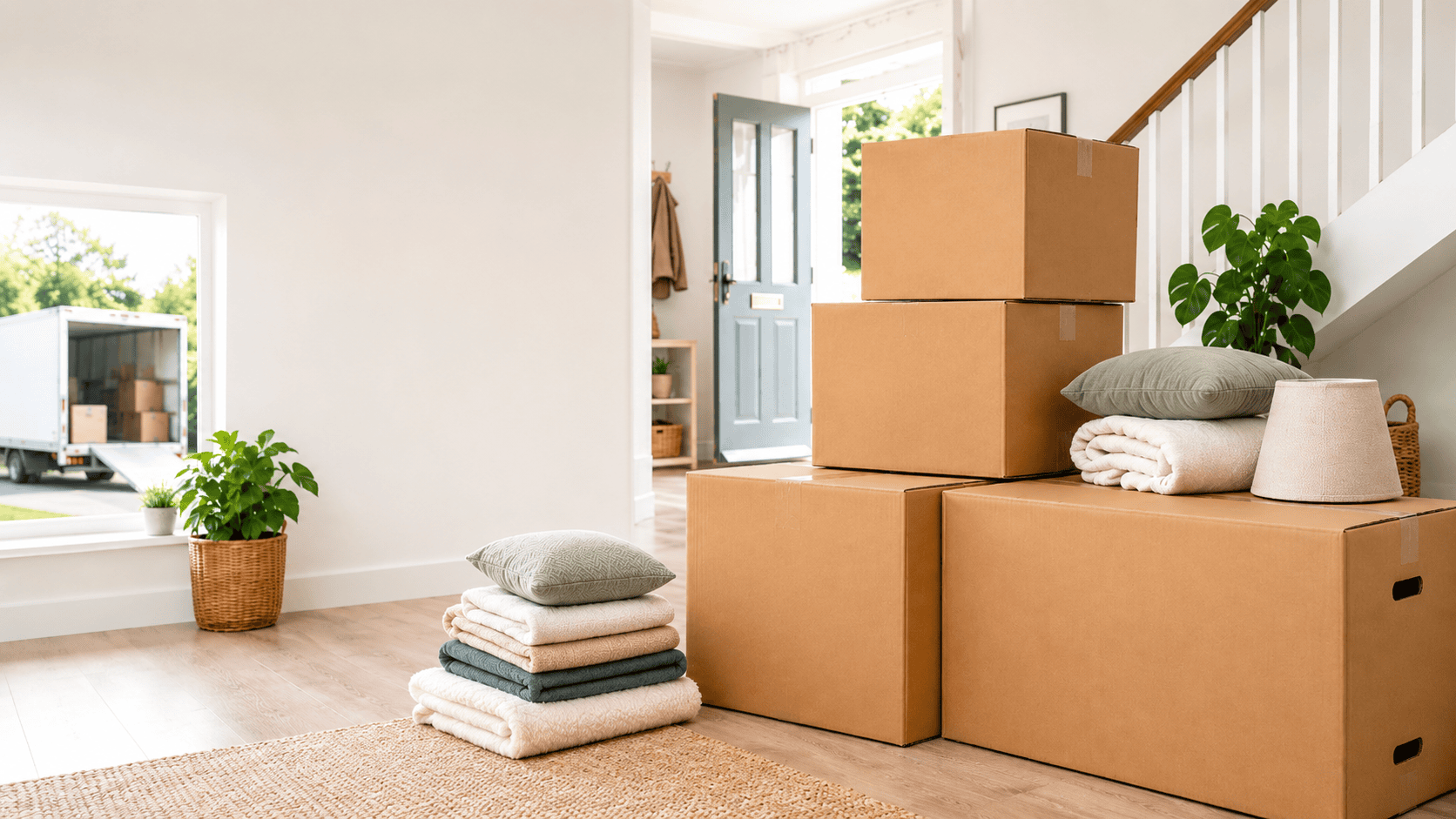
When you begin packing for a house move, it is tempting to assume that the biggest box is always the most useful. A large box can hold more, reduce the number of cartons you need, and make packing feel quicker. However, using large moving boxes correctly is more important than simply filling them with as many belongings as possible.
Large boxes are best suited to bulky but relatively lightweight household items. When packed carefully, they can help you organize your move, make better use of space in the removal van, and protect your belongings during transport.
This guide explains what to put in large packing boxes, which items to avoid, how they compare with extra-large moving boxes, and what UK households should look for when buying boxes for moving home.
What Is Considered a Large Moving Box?
The exact measurements of a large moving box can vary between suppliers. This is why it is important to check the dimensions, capacity, and cardboard strength before placing an order.
At RemovalBoxes.co.uk, the Large Moving Box has a capacity of 95 liters and measures 457 × 457 × 457 mm (18 × 18 × 18 inches). Its square shape provides a useful balance between internal space, stability, and ease of handling.
The box is made from strong double-walled cardboard and is designed to work alongside other modular box sizes. Modular boxes fit together more neatly when stacked, helping to maximize the available room in a removal van or storage unit.
Large cardboard boxes should offer plenty of space without becoming impossible to lift once packed. A box that appears inexpensive may not provide good value if it is too weak, awkwardly shaped, or difficult to stack safely.
What Should You Pack in Large Moving Boxes?
Large moving boxes are ideal for belongings that take up a lot of room without adding excessive weight.
Suitable items include:
- Bedding and duvet covers
- Pillows and cushions
- Towels and bathroom linen
- Curtains and soft furnishings
- Lightweight clothing
- Lampshades
- Children’s soft toys
- Artificial plants
- Large plastic kitchen items
- Lightweight decorations
- Board games and hobby supplies
These belongings need more room than they need strength at the base of the box. Using large packing boxes allows you to keep similar items together instead of squeezing them into several smaller cartons. By grouping related items, such as all the bedding from one bedroom or all towels from one bathroom, you make it much easier to identify and unpack what you need at your new home. Clearly organized boxes help streamline the moving process and save time when settling into each room.
For example, one box could contain the bedding required for a particular bedroom. Clearly labeling it “Main Bedroom – Bedding” will make it easier to find and unpack at your new home.
What Should You Avoid Packing in Large Boxes?
The main mistake people make with large boxes is filling them with heavy belongings.
Books, tools, tins, paperwork, weights, records, and dense kitchen equipment may fit inside a large box, but that does not mean they belong there. Once filled, the box may become too heavy to lift safely. Excessive weight can also place unnecessary pressure on the bottom and sides of the carton.
Heavy belongings are generally better packed in smaller or medium moving boxes. A smaller box limits how much can be added and is easier to carry once full.
Avoid filling large moving boxes entirely with:
- Books or magazines
- Heavy cookware
- Hand tools
- Bottles and jars
- Large quantities of paperwork
- Ceramic ornaments
- Dumbbells or exercise weights
- Heavy electrical equipment
You can place a few moderately heavy objects at the bottom of a large box, but the remaining space should be filled with lighter belongings. As a general rule, try to keep the total weight of a large moving box between 15 and 20 kilograms (33 and 44 pounds). This helps prevent injury and reduces the risk of box breakage during your move. Always test the weight before sealing the carton. If you cannot lift it comfortably, or if it feels too heavy, repack it to distribute the weight more safely.
Large Moving Boxes vs Extra Large Moving Boxes
Large and extra-large moving boxes serve different purposes.
A standard large box is usually suitable for everyday bulky belongings such as bedding, towels, clothing, and toys. An extra-large box offers more room for oversized, long, or unusually shaped items.
RemovalBoxes.co.uk’s Extra Large Moving Box provides 127 liters of capacity and measures 610 × 457 × 457 mm, or 24 × 18 × 18 inches.
Extra-large moving boxes may be useful for:
- Large cushions
- Bulky winter coats
- Lightweight lamps
- Oversized soft toys
- Artificial Christmas trees
- Large plastic household items
- Awkwardly shaped decorations
The same weight rule still applies. An extra-large carton should not be packed entirely with heavy items simply because it has more capacity. Its additional space is intended for bulky, lightweight belongings.
Why Double-Walled Boxes Are Better for Moving
A house move involves more than carrying a box from one room to another. Boxes may be stacked, loaded into a van, moved across uneven surfaces, and stored for several days or weeks.
Double-walled moving boxes contain two layers of corrugated cardboard rather than one. This construction provides greater rigidity and stacking support than the thin cartons commonly used for ordinary deliveries.
Strong, large moving boxes are particularly important because their wider panels and greater capacity can come under more pressure when full. A box that bends or loses its shape may become unstable when stacked.
Using quality boxes also gives you a consistent set of cartons. Random second-hand boxes collected from supermarkets or deliveries may have different dimensions, unknown strength, and existing wear. They can be difficult to stack and may already have weakened bases or corners.
How to Pack a Large Moving Box Correctly
Start by assembling the box carefully and sealing the base with strong packing tape. Run tape across the central seam and reinforce the edges if the contents require additional support.
Place the bulkiest or moderately heavier items at the bottom. Add lighter belongings above them so the box remains balanced. Avoid leaving large empty spaces, as the contents may shift while the box is being carried or transported.
Use packing paper, bubble wrap, towels, or other soft materials to fill gaps. This helps stop items from moving and supports the sides of the carton.
Do not force the top flaps closed or allow items to stick out above the box. A properly packed carton should close flat so that another box can be stacked safely on top.
Once sealed, label the box with:
- Its destination room
- A brief description of its contents
- Any handling instructions
- A fragile warning where appropriate
Labeling both sides is helpful because the top label may be hidden when boxes are stacked.
How Many Large Moving Boxes Will You Need?
There is no single number that suits every household, as the amount you need will depend on your property’s size, the number of people moving, and how many bulky belongings you own. As a general rule of thumb, a one-bedroom flat may require 2 to 4 large boxes, a two-bedroom flat typically needs 4 to 6 large boxes, and a three-bedroom family home could use 6 to 10 large boxes. These are only rough estimates, but they can help you plan and order enough supplies for your move.
A lightly furnished flat may require only a few large boxes, while a family home may need considerably more. Bedrooms, airing cupboards, lofts and children’s rooms often contain the highest number of bulky, lightweight items.
Rather than ordering only one size, choose a balanced selection of medium, large, and extra-large removal boxes. Medium cartons can hold heavier everyday items, while large boxes accommodate bedding and other bulky belongings.
RemovalBoxes.co.uk also provides house moving packs for properties ranging from one to six bedrooms. These packs combine various modular box sizes and packing materials, making them useful for households unsure how many boxes to order.
Are Large Cardboard Boxes Suitable for Storage?
Strong, large cardboard boxes can also be used for temporary household storage, provided they are kept in a clean, dry environment.
They are useful for storing seasonal clothing, spare bedding, decorations, and other items that are not needed year-round. Their regular shape allows them to be stacked more efficiently than loose bags or mismatched containers.
Before placing boxes into storage, make sure every item is clean and dry. Seal each carton properly and create a basic inventory so you know what is inside.
Avoid placing cardboard boxes directly against damp walls or on a floor where water could collect. If the storage area is susceptible to moisture, use shelving or pallets to raise the boxes from the ground.
Where to Buy Large Moving Boxes in the UK
When searching for large moving boxes in the UK, compare more than the price. Check the external dimensions, liter capacity, board construction, customer reviews, and whether the boxes are designed specifically for removals.
RemovalBoxes.co.uk supplies strong, double-walled removal boxes in modular sizes. The boxes are manufactured in the UK, are recyclable, and are available individually, in multi-packs, or as part of complete house-moving kits. While RemovalBoxes.co.uk is a trusted option, there are also other reputable UK suppliers offering quality moving boxes. Comparing several suppliers helps you find the right boxes that suit your needs, budget, and delivery preferences.
Choosing a specialist removal box supplier also makes it easier to order matching packing tape, bubble wrap, wardrobe boxes, and other materials at the same time.
Choose the Right Box, Not Simply the Biggest
Large moving boxes can make packing quicker and more organized, but only when used for the right items. Reserve them for lightweight, bulky household items, and use smaller cartons for books, tools, and other dense items. Do not overfill them, properly reinforce the base, and label every carton clearly.
A carefully selected mix of strong, modular moving boxes will be easier to carry, stack, and load. It will also provide better protection for your belongings from the moment you begin packing until the final box is opened in your new home.
Explore the range of Large Moving Boxes, Extra Large Moving Boxes, and complete House Moving Kits from RemovalBoxes.co.uk to find the right combination for your move.