
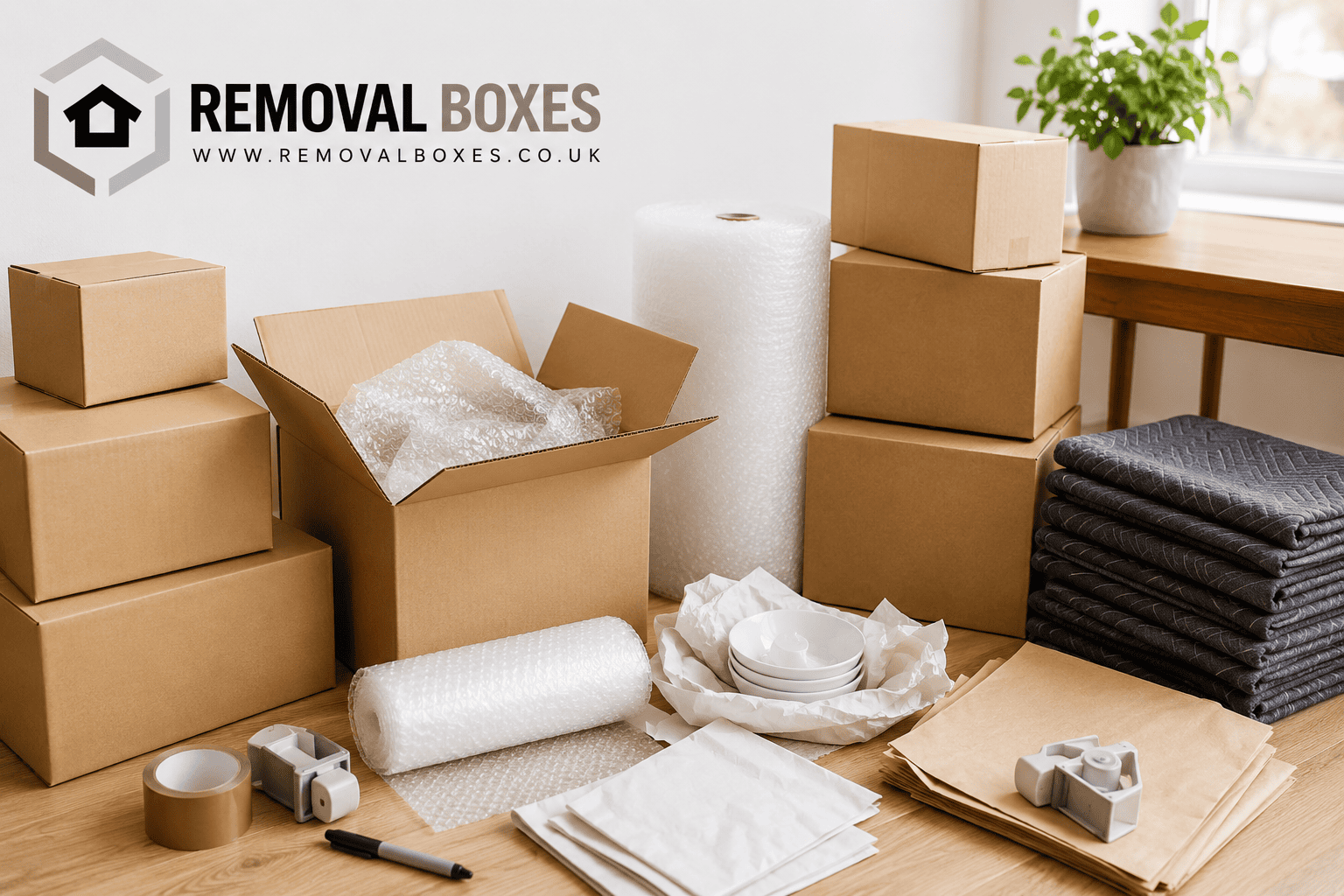
When people start preparing for a house move, boxes are usually the first thing on the shopping list. And rightly so. Strong removal boxes provide the structure you need to organize and transport everything from books and kitchenware to clothes and ornaments.
But boxes alone cannot do the whole job.
Think about what happens between closing your front door and opening the first box at your new home. Boxes are lifted, carried downstairs, stacked in a van, driven over speed bumps and moved again at the other end. Inside them, belongings can shift, knock against each other or rub against hard surfaces. Meanwhile, furniture and appliances that cannot go into boxes need protection of their own.
That is why having the right packing supplies can make such a noticeable difference.
From bubble wrap for delicate items to strong packing tape for boxes and protective removal blankets, a few carefully chosen materials can help you pack with confidence and reduce avoidable damage.
 Packing Supplies Are Your First Line of Defense
 Packing Supplies Are Your First Line of Defense
Good packing isn’t about wrapping everything in layer after layer of material. It is about matching the right protection to the right item.
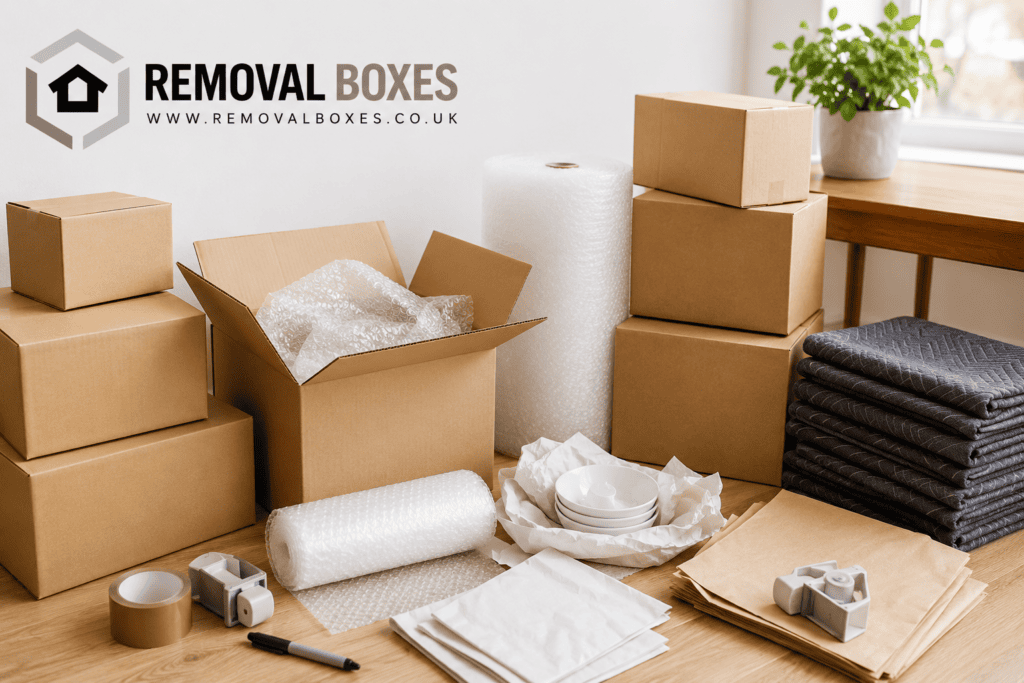
A successful packing setup will usually include:
- Strong removal boxes in several sizes
- Bubble wrap
- Packing paper
- Heavy-duty packing tape
- Removal blankets or transit blankets
- Labels and marker pens
- Protective materials for filling empty spaces
Each performs a different job.
Boxes provide structure. Bubble wrap cushions fragile objects. Packing paper protects surfaces and fills gaps. Tape keeps cartons securely closed. Blankets shield larger items that cannot fit inside a cardboard box.
Using these materials together creates a much more reliable packing system than relying on boxes alone.
If you are unsure how to organize the contents inside each carton, our guide to how to pack a removal box efficiently is a useful place to start.
Bubble Wrap for Moving: Use It Where It Matters Most
Few materials are as closely associated with moving house as bubble wrap.
There is a good reason for that. Bubble wrap for moving creates a lightweight cushioning layer around vulnerable belongings and helps absorb knocks and vibrations during handling and transport.
It is particularly useful for items such as:
- Glassware
- Mirrors
- Ceramics
- Picture frames
- Decorative ornaments
- Small electrical items
- Lamps and delicate accessories
- Valuable or sentimental possessions
For fragile belongings, place the item on a sheet of bubble wrap and cover it completely, paying additional attention to corners, handles and projecting edges. Secure the wrap carefully so it stays in position before placing the object into its box.
However, more bubble wrap does not automatically mean better protection.
One of the biggest packing mistakes is carefully wrapping an item and then putting it into a box with lots of space. Even when wrapped, the object can move around inside the carton.
Once your items are packed, gently fill the remaining gaps using packing paper or another suitable cushioning material. The goal is to minimize movement without forcing so much material into the box that it puts pressure on fragile contents.
For room-specific advice, you can also read our complete guide to safely packing kitchen items for moving, particularly when dealing with plates, glasses, appliances and breakable cookware.
Packing Tape for Boxes: A Small Supply with a Big Responsibility
It can be tempting to treat tape as an afterthought.
After all, once a box is folded together, it may already feel reasonably strong. But the base of a packed carton can be carrying several kilograms of weight. Weak tape, poorly applied tape, or tape that loses adhesion can turn a perfectly packed box into a moving-day problem.
Choosing the right packing tape for boxes provides a secure seal designed for cardboard cartons and transport.
Pay particular attention to the base of every box.
A useful technique is the H-taping method. First, run tape along the main center seam where the two flaps meet. Then reinforce the two open edges, creating an H-shaped seal across the base.
Repeat the process across the top once the box has been packed.
For heavier contents, reinforce the base before loading anything into the carton rather than trying to add more tape afterward.
Remember that tape is for securing boxes—not compensating for an overloaded carton. If a box feels uncomfortably heavy to lift, redistribute the contents into two smaller boxes.
Our 10 essential hacks for a stress-free house move include additional practical ideas for sealing, organizing and handling removal boxes efficiently.
Removal Blankets: The Protection Your Boxes Cannot Provide
Not everything you own will fit neatly into a cardboard carton.
Tables, drawers, televisions, cabinets, desks, headboards, and other large belongings need surface protection while they are carried through doors, maneuvered around corners, or positioned inside a removal vehicle.
This is where removal blankets become particularly useful.
Sometimes called transit or moving blankets, they provide a soft protective barrier around furniture and bulky possessions. They can help reduce the risk of scratches, scuffs and minor knocks while items are being handled.
Consider using removal blankets for:
- Wooden furniture
- Bed frames and headboards
- Dining tables and chairs
- Cabinets and drawers
- Large televisions
- Mirrors
- Appliances
- Painted or polished surfaces
Pay particular attention to corners and exposed edges, as these are often the first areas to contact walls, door frames, or other furniture.
Removal blankets are also helpful when items are placed next to one another inside a van. A protective layer between two hard surfaces can prevent rubbing and surface damage during the journey.
Match the Packaging to the Item, Not the Room
Many people organize their move room by room, which is an excellent strategy for staying organized. But when choosing protective materials, think about each item’s characteristics rather than simply where it came from.
For example, your living room may contain a completely different mix of possessions:
A stack of books needs a strong small box.
A glass ornament may need bubble wrap and cushioning.
A television may require careful wrapping and a removal blanket.
Cushions may need a large box.
A framed picture may need corner protection and additional padding.
Taking a few extra seconds to decide what each possession needs can make packing more efficient and help you avoid wasting protective materials.
The same principle applies to box size. Large boxes are useful for lightweight bulky belongings but can become extremely difficult to carry when filled with books, tools, or other dense items. Our guide to using large moving boxes correctly explains what works best in larger cartons and what to pack elsewhere.
Do Not Forget What Happens Inside the Box
Packing supplies protect belongings most effectively when they work together.
Imagine a set of glasses packed inside a sturdy box. Each glass might be beautifully wrapped in bubble wrap, but if there is a large space around them, they can still shift whenever the box is turned, lifted, or placed into a vehicle.
Before sealing a box, gently test it.
If you can hear or feel items moving, add suitable padding to the empty spaces.
As a general packing rule:
Heavy items go towards the bottom.
Place lighter and more fragile items above them.
Empty gaps should be filled.
The top of the box should close flat without being forced.
This gives the carton a stable shape and makes it easier to stack safely with other boxes.
For a deeper look at why movement inside cartons matters, see our guide explaining what really happens inside a moving box during transport.
Label Your Boxes Before Moving Day
Protective packing is only part of the job. Clear labeling can also prevent unnecessary handling.
Instead of writing only “Kitchen” or “Bedroom,” consider including a little more information:
KITCHEN – GLASSWARE – FRAGILE
or
BEDROOM – BEDDING – LIGHT
This immediately tells anyone moving the boxes whether the carton needs careful handling and where it belongs at the destination.
Label at least two sides where possible. When boxes are stacked, the information written on top may not be visible.
A simple labeling system can save plenty of time when unloading and means fragile boxes are less likely to end up underneath heavier cartons.
Build a Packing Kit Before You Start
One of the easiest ways to make packing less frustrating is to gather everything before opening the first box.
Instead of repeatedly stopping because you have run out of tape or cannot find the marker pen, set up a simple packing station with your core packing supplies.
Keep boxes, tape, bubble wrap, paper, labels and markers together and move your packing kit from room to room as you progress.
You will work faster, stay organized and be much less tempted to improvise with unsuitable materials when proper packing supplies are already within reach.
Better Packing Starts Before Moving Day
A safer move does not begin when the removal van arrives. It begins when you decide how to protect each possession.
Strong boxes give your belongings structure, bubble wrap cushions fragile items, reliable packing tape keeps cartons secure, and removal blankets protect larger possessions that boxes cannot cover.
Use each material for the job it does best rather than taking a one-size-fits-all approach.
With sturdy removal boxes, suitable protective materials, and a little preparation, moving day becomes less about worrying what might break and more about getting everything safely into your new home.