
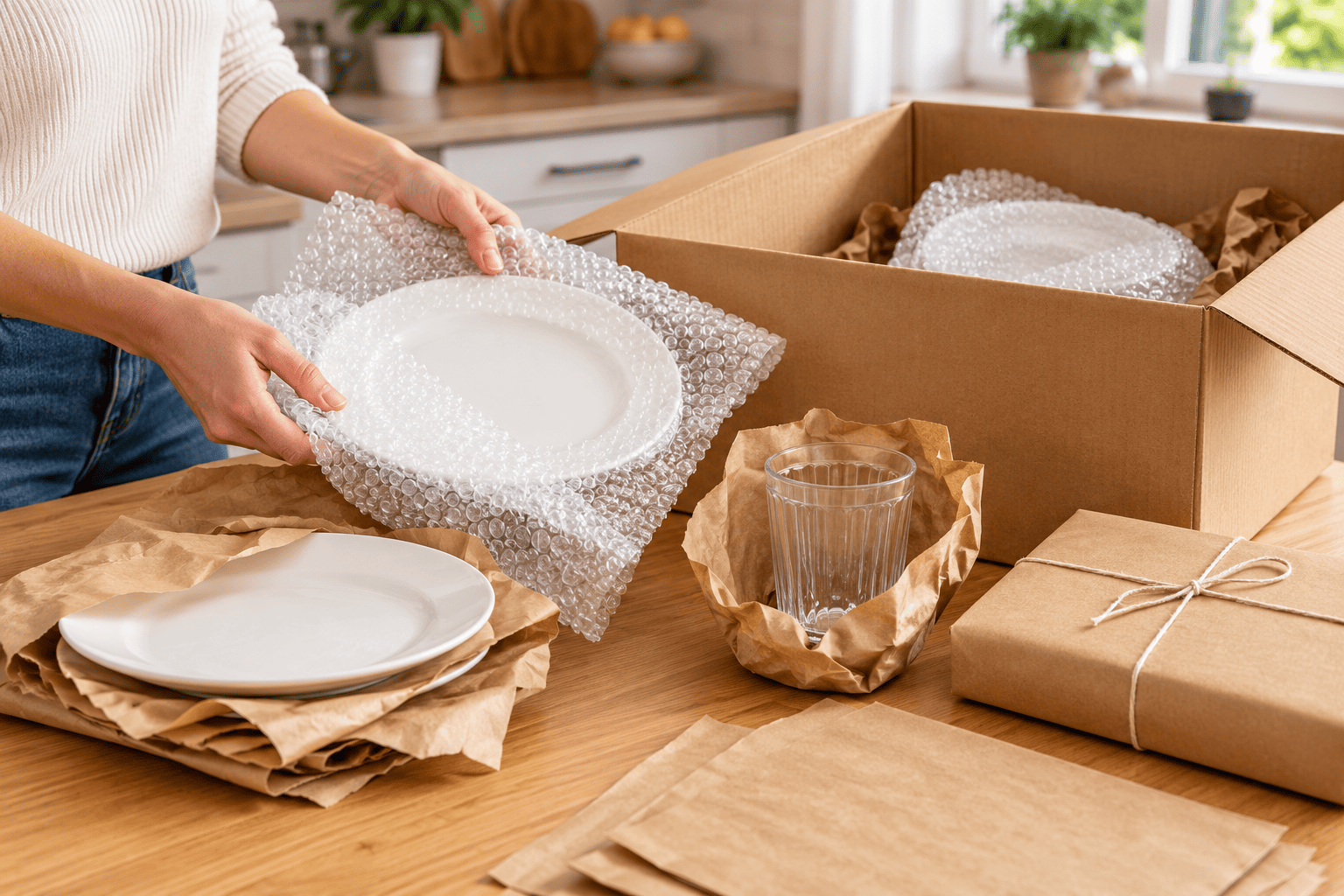
The kitchen is usually the room with the most awkward mix of things to pack. A saucepan can withstand a journey that might chip a plate, while a glass stem needs different care than a metal baking tray. That is why choosing between bubble wrap and packing paper is easier when you pack item by item. Neither material can protect a whole kitchen on its own; the box, the space around each item, and the way you stack it matter too.
If you’re looking for advice on how to pack a kitchen when you’re moving, follow this rule: separate and fill the items with paper and then use bubble wrap on those objects which require extra cushioning to protect against bumps.
What does each material actually do?
Packing paper bends around plates, mugs, and utensils without adding much bulk. It separates hard surfaces, helps prevent rubbing, and can be crumpled to fill empty spaces in a carton. Packing paper from Removal Boxes comes in large sheets that you can fold or cut to suit different items.
Small bubble wrap adds a layer of air-filled cushioning around crockery and other vulnerable objects. It is particularly useful for a delicate rim, handle or ceramic piece that may take a knock during handling. It can also line part of a box, as long as the contents are kept from moving. More layers don’t fix a poorly fitted carton: even a carefully wrapped item can collide with another if the gaps remain empty.
How should you wrap plates and bowls?
When packing everyday plates, place a sheet of clean packing paper between each one and wrap them either individually or in small, manageable groups. Cushion the bottom of a sturdy box and pack the plates on their edges, just as records are, with sufficient material between them so that they don’t touch. Don’t pack them in a tight row or let the plates lean against an unwrapped box wall.
For fine china, thin ceramics, or pieces with vulnerable edges, place a soft paper layer against the surface first, then add bubble wrap around the outside. Paper keeps a delicate finish from direct contact with plastic; the bubble layer supplies extra cushioning. Bowls can be nested only when each has suitable protection between it and the next. If a stack becomes heavy, split it between boxes instead of filling every spare centimeter.
Use a sturdy medium moving box for many kitchen loads, but keep its packed weight easy to lift. Put heavier, more robust items lower down and lighter, fragile pieces above them. Label the carton “Kitchen—plates—fragile” on at least two sides.
What about glasses, mugs and stemware?
Packing paper is useful for getting into the hollow part of a glass and wrapping its shape. Give each glass its own layer, then arrange them so their rims do not touch. Add dividers if you have them, and fill gaps so individual pieces cannot rattle. For a sturdy everyday mug, paper around the body and additional attention to the handle may be enough for a short, carefully packed move.
A thin wine-glass stem or a glass with an unusual handle needs more. Cushion the weak point with paper, then wrap small bubble wrap around the protected glass before placing it in a compartment or well-padded box. Do not pull tape across the glass itself. Keep the heaviest glasses at the bottom of the carton and the most delicate pieces above, without placing weight on their rims.
Before sealing, gently move the closed box a little. If you hear glass touching glass, reopen it and add separation. “Fragile” written outside is helpful, but it cannot replace a snug interior.
Pots, pans, baking trays and sharp tools
Metal cookware generally needs less cushioning than china. Paper between nested pans or trays helps stop scratches and keeps non-stick surfaces from rubbing. Wrap removable glass lids separately, with bubble wrap around the paper layer when they need extra protection. Avoid loading a large box with every heavy pan simply because it fits; use a smaller carton or divide the weight.
Kitchen knives need a safe blade cover and a secure, clearly identified package. Wrap or sleeve each blade so it cannot cut through the box or injure someone opening it. Paper can keep blades separated, but a rigid guard or suitable knife block is a better first layer than loose bubble wrap. Keep sharp items out of an unlabelled mixed-utensil box.
For small appliances, use the original packaging if it is sound and available. Otherwise, remove or secure loose accessories, protect protruding controls, and use cushioning in a properly sized box. Check the manufacturer’s instructions for preparation, especially for appliances containing water or removable parts. Bubble wrap can protect the exterior, but don’t press it tightly against a delicate screen or finish without a soft intervening layer.
How much wrapping is enough?
Prepare a packing station before opening cupboards: strong boxes, tape, clean paper, a bubble wrap roll and a marker. Wrap one type of item at a time so you can judge how much material it needs. Start with modest coverage, then add protection to exposed edges, handles, and other weak points. Use crumpled paper or suitable void fill to stop movement around the wrapped items.
Once packed, the top flaps should close flat without pressing on the contents. Tape the base and top securely, and test-lift the carton. If it feels awkward or too heavy, repack it into two boxes. The site’s complete kitchen packing guide covers a wider packing order and the rest of the room.
Cost, reuse and clearing up after the move
Packing paper often makes sense across a whole kitchen because one supply can wrap, separate and fill gaps. Reserve bubble wrap for glassware, fine china, fragile lids and items with exposed corners if you want to use it efficiently. Compare the cost of the full packing setup, including suitable boxes, rather than choosing the cheapest roll.
Unpack carefully and keep clean, unpopped bubble wrap for another parcel or move. Clean paper may be reusable too; check your council’s rules before recycling paper or flexible plastic, particularly if tape or food residue is attached. Don’t let an environmental preference lead you to under-protect a sentimental or costly object, but also avoid wrapping every metal utensil in plastic when paper will do the job.
The best answer is usually a combination.
Then, which is better for packing in the kitchen, bubble wrap or packing paper? Paper is the versatile everyday material for separating plates, for covering surfaces, and for filling gaps. Bubble wrap offers extra cushioning for the more fragile items which need it. When used together in a robust and properly packed moving box, they address different aspects of the same issue.
Choose protection based on the item, keep weight manageable, and check for movement before sealing the box. You can find bubble wrap, packing paper, and other supplies at Removal Boxes when you are ready to put your kitchen packing plan together.