
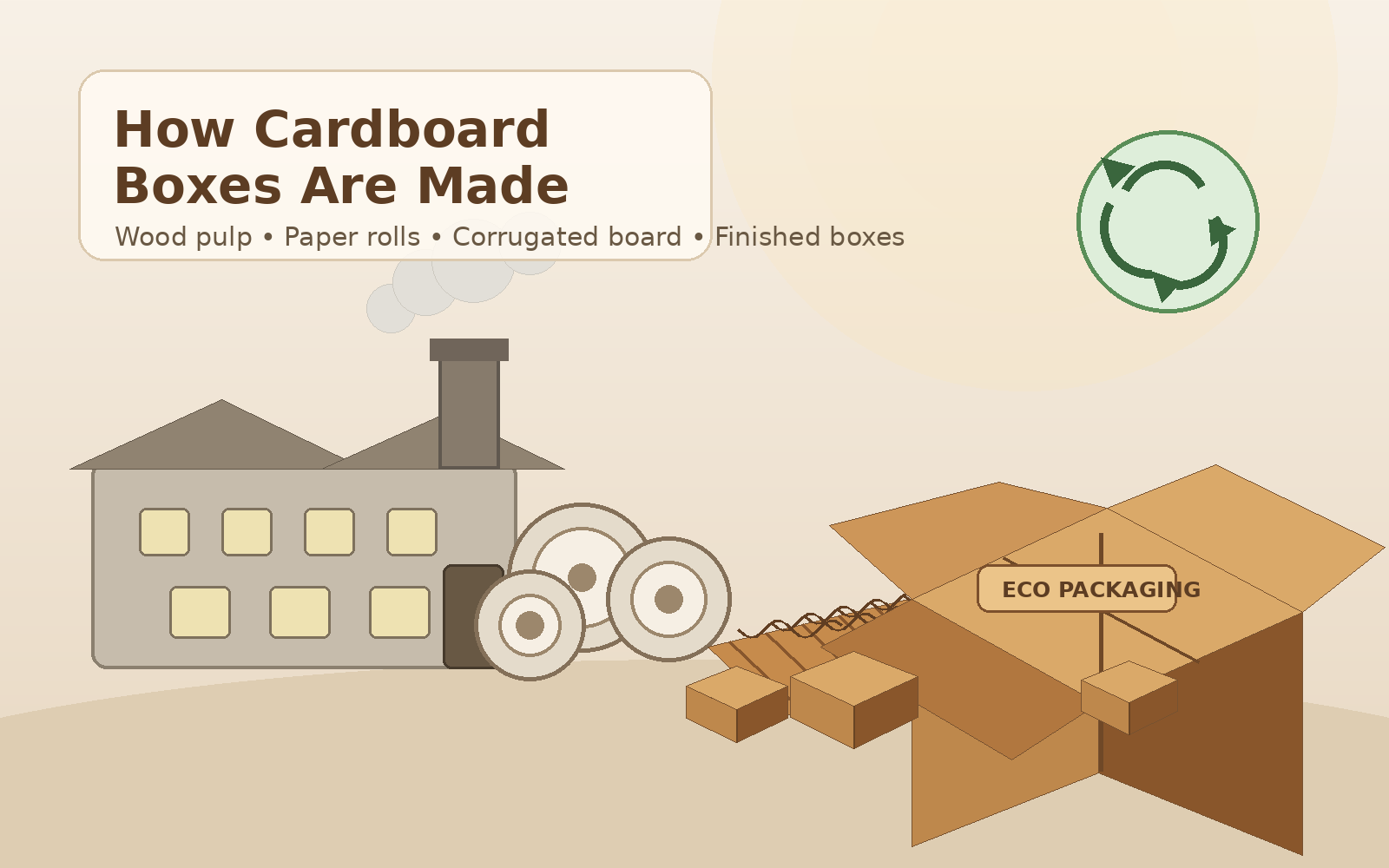
The Making of Cardboard Boxes: From Raw Materials to Finished Products
From Raw Materials to Finished Products: How Cardboard Boxes Are Made
Cardboard boxes are used every day for shipping, storage, moving, retail packaging, food delivery, and product protection. They may look simple, but the process of making them involves several important steps. From wood pulp and recycled paper to corrugated board, printing, folding, and glueing, every stage helps create a strong, lightweight, affordable, and recyclable packaging solution.
Knowing how cardboard boxes are made explains their popularity. The process combines natural raw materials, modern machinery, recycling systems, and careful design to produce boxes that protect products during transport and storage.
What Are Cardboard Boxes Made Of?
Cardboard boxes are mainly made from paper-based materials. The most common raw materials are wood pulp, recycled paper, linerboard, and corrugating medium.
Wood pulp usually comes from softwood trees such as pine, spruce, and fir. These trees have long fibres, which help create strong and durable paper. Recycled paper is also widely used in cardboard box production. Old boxes, newspapers, office paper, and other paper waste can be collected, cleaned, and processed into new cardboard products.
Many cardboard boxes are made using a mixture of virgin and recycled paper fibres. Virgin fibres provide strength, while recycled fibres make the production process more sustainable and cost-effective.
Raw Materials Used in Cardboard Box Manufacturing
The main raw materials used in manufacturing cardboard boxes include wood chips, recycled paper, water, starch-based adhesive, and sometimes coatings or inks.
Wood chips are processed into pulp, while recycled paper is mixed with water and cleaned to remove unwanted materials such as tape, staples, plastic, glue, and ink. Water is used throughout the pulping and paper-making process. Adhesive is used later to glue the fluted paper layer to the flat linerboards.
For printed boxes, inks are added during the printing stage. Some cardboard boxes may also receive special coatings to improve moisture resistance, durability, or print quality.
Step 1: Pulping Wood and Recycled Paper
The first major step in making cardboard boxes is pulping. Pulping is the process of breaking down wood chips or recycled paper into fibres.
When wood is used, the logs are stripped of bark and cut into small chips. These chips are then processed using mechanical or chemical pulping. Mechanical pulping grinds the wood to separate the fibres. Chemical pulping uses chemicals to remove lignin, the natural substance that holds wood fibres together. This produces stronger pulp for high-quality paper.
When recycled paper is used, it is mixed with water to form a slurry. The slurry is cleaned to remove non-paper materials. The fibres are then refined, so they can be reused in new cardboard boxes.
Step 2: Turning Pulp into Paper Sheets
After pulping, the fibres are mixed with water and spread onto a moving mesh screen. As the mixture moves forward, water drains away, and a wet mat of fibres begins to form.
This fibre mat is pressed to remove more water and then dried using heated rollers. The result is a continuous sheet of paper. This paper is later used to make the two key parts of corrugated cardboard: linerboard and corrugating medium.
Step 3: Making Linerboard and Corrugating Medium
For cardboard boxes, two main types of paper are produced: linerboard and corrugating medium.
Linerboard is the flat paper used on the outside and inside surfaces of corrugated cardboard. It provides the box strength, structure, and a smooth surface for printing.
Corrugating medium is the paper used to create the wavy middle layer. This fluted layer gives cardboard its strength, cushioning, and resistance to crushing.
Both materials are essential. Linerboard provides a stable outer surface, while the corrugating medium helps absorb pressure and protect products during shipping.
Step 4: How Corrugated Cardboard Is Made
The next step is corrugating. This is where flat paper becomes strong corrugated board.
The corrugating medium is passed through heated rollers that shape it into waves, also called flutes. Adhesive is then applied to the tips of the flutes. The fluted paper is glued between two flat linerboards to form a strong layered material.
This structure is called single-wall corrugated board. It is the most common type used for shipping boxes.
For heavier or more fragile products, manufacturers may use double-wall or triple-wall corrugated board. A double-wall board has two fluted layers and three linerboards. A triple-wall board has three fluted layers and four linerboards. The more layers a box has, the stronger and more protective it becomes.
Step 5: Cutting, Scoring, and Shaping the Cardboard
Once the corrugated board is made, it is cut and shaped according to the required box design.
Special machines such as slotters and die cutters are used to cut, crease, score, and perforate the cardboard. Scoring creates fold lines so the cardboard can bend neatly without cracking. This helps the box keep its correct shape during assembly.
At this stage, manufacturers can produce many different types of boxes, including simple shipping cartons, display boxes, handle boxes, window boxes, dividers, inserts, and custom packaging designs.
Step 6: Printing and Branding Cardboard Boxes
Many cardboard boxes are printed before they are folded and assembled. Printing allows businesses to add logos, product names, instructions, barcodes, handling symbols, and branding designs.
Flexographic printing is commonly used for large production runs because it is fast and cost-effective. Digital printing is often used for smaller orders, custom packaging, or designs that require more flexibility.
Printed cardboard boxes help improve product presentation and brand recognition. They also make it easier for warehouses, retailers, and customers to identify products.
Step 7: Folding, Glueing, and Assembling the Box
After cutting and printing, the cardboard is folded and glued into its final box shape.
Machines fold the cardboard along the scored lines and apply glue to the required edges. The glued sections are pressed together to form a strong bond. Most boxes are shipped flat-packed so they are easy to store and transport before use.
Some heavy-duty boxes may be stitched or stapled for extra strength, but glueing is the most common method for standard cardboard box production.
Before shipping, finished boxes are inspected for size, strength, print quality, folding accuracy, and glue bonding. Defective boxes are removed to maintain quality.
Why Corrugated Cardboard Boxes Are So Strong
Corrugated cardboard is strong because of its fluted middle layer. The wavy structure spreads pressure across the board and helps the box resist bending, crushing, and impact.
The air pockets created by the flutes also provide cushioning. This helps protect products during shipping and handling.
Different flute sizes offer different benefits. Larger flutes provide better cushioning and stacking strength. Smaller flutes give a smoother surface for printing and better folding performance.
This strength-to-weight ratio is one of the main reasons corrugated cardboard boxes are widely used in packaging.
Types of Corrugated Cardboard Boxes
There are several types of corrugated cardboard boxes, depending on the level of strength and protection required.
Single-wall cardboard boxes are made with one fluted layer between two linerboards. They are commonly used for everyday shipping and packaging.
Double-wall cardboard boxes have two fluted layers and three linerboards. They are stronger and are often used for heavier products.
Triple-wall cardboard boxes have three fluted layers and four linerboards. These are used for very heavy, large, or fragile items that need maximum protection.
Choosing the right type of cardboard box depends on the product’s weight, size, fragility, shipping distance, and storage conditions.
Sustainability in Cardboard Box Production
Cardboard boxes are popular because they are recyclable, reusable, and often made from renewable materials. Many manufacturers use recycled paper to reduce the need for new raw materials and lower landfill waste.
Sustainable forestry also plays an important role. Responsible manufacturers source wood from managed forests where trees are replanted and ecosystems are protected.
Modern cardboard factories also focus on reducing energy use, water consumption, and production waste. Offcuts and rejected cardboard are often collected and returned to the recycling process. This helps create a more circular and environmentally responsible production system.
Why Cardboard Boxes Are Important in Everyday Life
Cardboard boxes are essential for many industries. E-commerce companies use them to ship products to customers. Food and beverage companies use them for packaging and transport. Retailers use them for storage, display, and delivery. Moving companies use them for packing household items.
Their popularity comes from their practical benefits. Cardboard boxes are inexpensive, lightweight, strong, customisable, and easy to recycle. They can be produced in many sizes and shapes, making them suitable for a wide range of products.
Cardboard boxes also help reduce product damage during shipping. They make handling easier and allow goods to be safely stacked in warehouses, stores, and delivery vehicles.
FAQs About How Cardboard Boxes Are Made
What are cardboard boxes made of?
Cardboard boxes are usually made from wood pulp, recycled paper, linerboard, and corrugating medium. Many boxes combine virgin paper fibres for strength and recycled fibres for sustainability.
How are cardboard boxes made step by step?
Cardboard boxes are made by pulping raw materials, forming paper sheets, creating corrugated boards, cutting and scoring them, printing them, and then folding and glueing them into the final box shape.
How is corrugated cardboard made?
Corrugated cardboard is made by shaping paper into a fluted middle layer and glueing it between two flat linerboards. This layered structure gives the cardboard strength, cushioning, and durability.
Why is corrugated cardboard strong?
Corrugated cardboard is strong because the fluted middle layer spreads pressure and absorbs impact. The air pockets inside the flutes also help cushion products during shipping.
Are cardboard boxes made from trees?
Yes, many cardboard boxes are made partly from wood pulp that comes from trees. However, many boxes also contain recycled paper fibres, which reduces the need for new raw materials.
Are cardboard boxes made from recycled paper?
Yes, recycled paper is commonly used in cardboard box production. Used boxes, newspapers, office paper, and other paper products can be processed and reused to make new cardboard boxes.
What is the difference between cardboard and corrugated board?
“Cardboard” is a general term for thick paper-based material. Corrugated board is a specific type of cardboard made with a fluted middle layer between flat linerboards. Corrugated board is stronger and commonly used for shipping boxes.
How are cardboard boxes printed?
Cardboard boxes are usually printed using flexographic or digital printing. Printing can include logos, product details, barcodes, instructions, and branding designs.
Why are cardboard boxes eco-friendly?
Cardboard boxes are eco-friendly because they are recyclable and reusable, and they are often made from recycled fibre. When produced from responsibly sourced wood and recycled materials, they offer a sustainable packaging option.
Conclusion: The Complete Cardboard Box Manufacturing Process
The process of making cardboard boxes starts with raw materials such as wood pulp and recycled paper. These materials are turned into pulp, formed into paper, and processed into linerboard and corrugating medium. The paper is then combined to create corrugated board, which is cut, printed, folded, glued, and inspected.
Every stage of the process contributes to the strength, durability, appearance, and sustainability of the finished box. From raw material selection to final assembly, cardboard box manufacturing is a carefully planned process that produces one of the most useful packaging solutions in the world.
As businesses continue to focus on sustainability, cardboard boxes remain an important choice for eco-friendly packaging. They are strong, lightweight, affordable, customizable, and recyclable, making them ideal for shipping, storage, retail, and everyday use.