

Yes—moving boxes can become storage boxes after the move, as long as they’re still strong, clean, and dry, and the place you store them in suits cardboard. That can save you from buying another set of containers as you settle into a new home. The useful question is not simply whether a box survived the van journey. It is whether that particular box, with those contents, can remain stable and accessible for the weeks or months ahead.
If you are arranging storage for moving house, make that decision while unpacking. Separate things you need now from things you genuinely want to keep packed, then assess the boxes before they disappear into a cupboard or storage unit.
Check the box before giving it a second job.
Set the box on a level floor and inspect its base, corners, walls and taped seams. A dry, square box with firm panels can usually be reused. A crushed corner, bowed side, or softened bottom warns that it may not stack well. Remove or replace loose tape and check for damp patches, odors or signs of pests. If a box has been wet, let it dry and inspect it carefully; replace it if the board has lost stiffness.
RemovalBoxes.co.uk sells double-wall medium moving boxes designed for stacking. Their construction is useful when a box needs to serve both transport and storage, but condition still matters after handling. Don’t assume a strong new box has the same capacity once it’s been overloaded, dropped, or stored somewhere damp.
Empty boxes that pass inspection can be flattened for a future move. If you plan to fill them again now, sort them by size and decide what each will hold before resealing the bases.
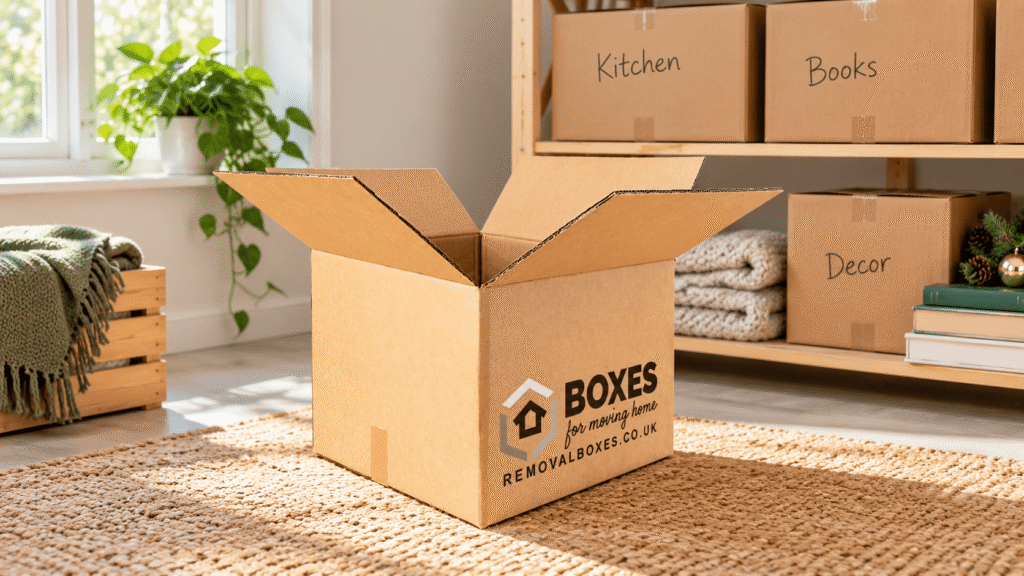
Which belongings belong in cardboard storage boxes?
Cardboard works well for dry, everyday possessions in a clean indoor space: spare kitchenware, seasonal decorations, toys, hobby materials, and household items you will want to find again. Wrap breakables separately and fill gaps so they do not knock against one another. Use smaller or medium cartons for dense contents such as books; large moving boxes are better for bulky, lighter things such as bedding or cushions.
Be more cautious with irreplaceable papers, photographs, valuable textiles, electronics and anything that could leak. These may need specialist sleeves, a more protective container or a location with tighter temperature and humidity control. Never pack food, damp clothing or unsealed liquids into a cardboard box for storage. Cardboard is recyclable and convenient, but it is not waterproof or airtight.
The site’s guide to large moving boxes explains why extra room should not be treated as permission to fill a carton with heavy items. The same weight rule matters even more when boxes will sit in a stack for a while.
How to pack moving boxes for storage
Start with a sound base and seal it with strong packing tape. Put heavier objects at the bottom, but keep the total weight comfortable to lift. Protect fragile pieces with paper, foam, or bubble wrap, then fill empty spaces without crushing the contents. Close the top flat so the box can support another carton; a bulging lid is a sign to split the load.
Write a useful label on more than one side: room, contents, and whether the box should be opened soon. “Kitchen—baking equipment” will help more than “miscellaneous.” If several boxes look similar, number them and keep a simple list on your phone or in a notebook. The site’s moving box inventory guide offers a more complete system that can keep working after moving day.
Set aside an “open first” group for paperwork, chargers, cleaning supplies, and daily essentials. Keep those boxes easy to reach, not buried under seasonal decorations. If a box is meant for storage rather than immediate unpacking, note a date to review it. Otherwise, temporary storage can become a forgotten pile.
Where should cardboard boxes be stored?
A dry, clean room with a stable environment is the simplest choice. Keep boxes off bare concrete and away from leaks, radiators, or walls showing condensation. A shelf, pallet, or other suitable raised surface can make it easier to inspect beneath the stack. Leave a small path so you can reach boxes at the back without moving every carton in front.
For a self-storage unit, ask about the unit’s conditions and any rules on stacking or prohibited items. Place heavier, well-sealed boxes at the bottom and lighter ones above, aligning corners rather than balancing a small box on a large lid. Do not stack higher than you can safely reach or lift. Put boxes you will need soon near the front, with labels facing out.
Lofts, garages and sheds deserve extra care because temperatures and moisture can vary. Inspect the space before storing cardboard there, especially if the contents are sensitive. If dampness, pests or leaks are likely, choose a more suitable location or container instead. “Storage for moving house” can mean a few weeks between properties or several years in an outbuilding; those situations call for different levels of protection.
When should you replace or pass on moving boxes?
Replace a carton when its panels soften, seams split, the bottom sags, or it cannot be stacked squarely. A fresh box is a sensible choice for valuable or fragile contents even if the old one looks passable. If you need a consistent set for your storage space, browse the site’s moving boxes and choose sizes that fit both your belongings and the shelf or unit.
If you no longer need a sound box, flatten it and offer it to someone preparing to move. Recycle boxes that are no longer fit for use according to your local collection rules. The site’s post-move box guide covers more ways to reuse, donate or recycle the extras.
Make your storage plan part of the move.
Reusing removal boxes is practical when you choose the right contents and storage conditions. Inspect each box, repack it to a manageable weight, label it clearly, and stack it where it will stay dry. Revisit stored items periodically so you can spot damage early and decide whether they still need a place in your home.
That approach turns moving boxes into useful short- or medium-term storage without treating cardboard as a universal solution. Plan the storage space before you seal the final carton, and the next time you need an item, you will know exactly where to look.