
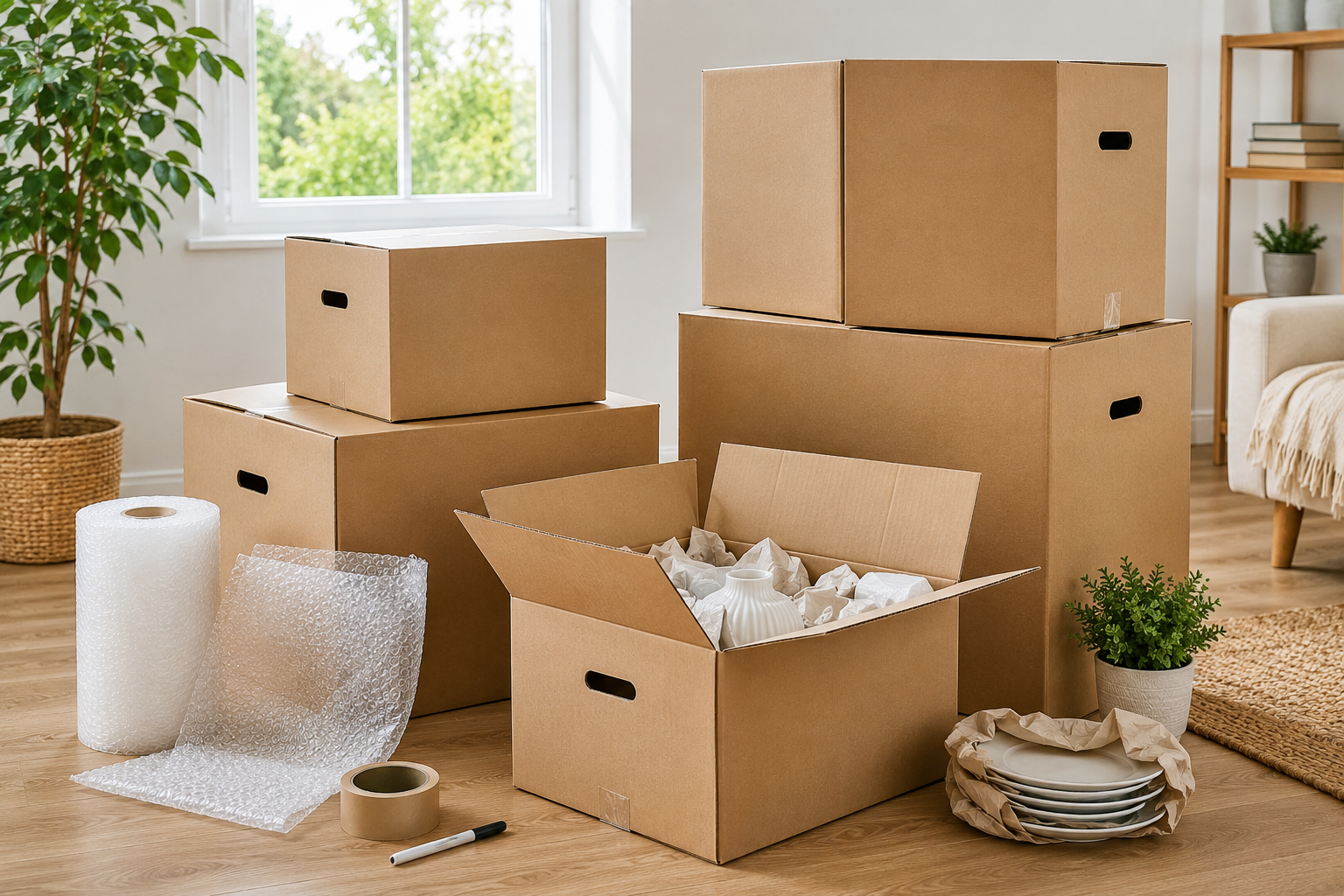
There is a point in almost every house move when it suddenly becomes real: you look around your home and realize that everything you own needs to be packed, protected and transported somewhere else.
The temptation is to find as many cardboard boxes as possible and start filling them. But a smoother move begins with something much simpler — choosing the right removal boxes before you start packing.
A box carrying books has very different requirements from one carrying bedding. Your glasses need different protection from your shoes, while clothes, kitchen equipment, ornaments and paperwork all have their own packing challenges.
Using a sensible mix of strong boxes for moving house can make packing easier, help protect your belongings and make better use of space in a removal van or storage unit.
Here is how to get it right.
Start With Boxes Designed for Moving
Not every cardboard box is suitable for a house move.
A box may look perfectly strong while empty but behave very differently once it has been filled, lifted, stacked and transported. During a move, boxes may be carried up and down stairs, placed on trolleys, stacked in a van and moved several times before they reach the correct room.
That is why strength matters.
Purpose-made moving boxes are a better option than collecting an assortment of old cartons with unknown strength or previous wear.
At RemovalBoxes.co.uk, our removal boxes are manufactured in the UK from double-walled cardboard and come in four modular sizes. The modular design also helps the boxes fit together when stacked, making better use of available space during transport or storage.
Which Removal Box Size Should You Use?
One of the biggest packing mistakes is assuming that bigger automatically means better.
A huge box filled with books might technically close, but that does not mean anyone will enjoy lifting it.
A better rule is:
Small box = smaller, heavier belongings.
Large box = bigger, lighter belongings.
Your exact packing will depend on what you own, but this approach provides a useful starting point.
Small Moving Boxes
Small boxes are particularly useful for dense belongings that quickly become heavy.
Consider using them for:
- Books
- Tinned food
- Small kitchen equipment
- Tools
- Paperwork
- CDs and media
- Small ornaments
Keeping heavy belongings in smaller cartons makes their final weight easier to manage.
If books are one of your biggest packing jobs, our guide to choosing the best box size for moving books explains the process in more detail.
Medium Moving Boxes
Medium cardboard moving boxes are useful all-rounders and will probably appear in several rooms.
They can work well for:
- Pots and pans
- Toys and games
- Shoes
- Folded clothing
- Small appliances
- Bathroom products
- Office supplies
- General household belongings
Rather than packing according to how much space remains, pay attention to the final weight. If a medium box is becoming uncomfortable to lift, stop adding heavy items and use lightweight padding to fill the remaining gaps.
Large Removal Boxes
Large boxes offer plenty of capacity, but you should use that space intelligently.
They are particularly useful for bulky items that do not weigh too much, including:
- Bedding
- Towels
- Cushions
- Lampshades
- Lightweight kitchenware
- Soft toys
- Larger household accessories
A large carton filled with heavy belongings can quickly become difficult to carry and put unnecessary pressure on the cardboard.
Read our detailed guide to using large moving boxes correctly before packing your bulkier belongings.
Don’t Buy Every Box in the Same Size
Imagine trying to pack an entire kitchen, bedroom, bookcase and airing cupboard into identical cartons.
It sounds simpler when ordering. In practice, it makes packing more difficult.
Homes contain a mixture of heavy, light, fragile, bulky and awkward belongings. Your removal boxes should reflect that.
A selection of compatible box sizes allows you to put heavy belongings into smaller cartons and reserve larger cartons for lighter items. It can also create a more organized load when boxes are stacked.
For households that do not want to calculate every individual box, a complete moving pack can be a convenient alternative.
RemovalBoxes.co.uk offers House Moving Packs designed for properties ranging from one to six bedrooms.
Think Room by Room, Not Box by Box
Instead of standing in front of a pile of empty boxes wondering what to put in them, divide your packing project by room.
Start with areas and belongings you use least frequently.
That might mean beginning with:
Loft or garage → spare bedroom → books and decorations → living areas → bedrooms → kitchen essentials.
Packing this way has two advantages.
First, everyday life can continue while you prepare for the move. Packing the kettle three weeks early offers little benefit.
Second, boxes from the same room remain together, which can make unloading and unpacking considerably easier.
If you are unsure how many cartons your home may require, see our room-by-room guide to how many removal boxes you need.
Give Fragile Belongings Room to Survive the Journey
Buying strong boxes is only part of protecting fragile belongings. What happens inside the carton matters too.
Plates, glasses, ornaments and other breakable possessions should be individually protected using appropriate packing material. Fill empty spaces inside the box so the contents cannot move freely during transportation.
As a general packing principle:
- Create cushioning at the bottom.
- Place appropriately wrapped items inside.
- Keep heavier belongings lower down.
- Fill empty spaces with protective material.
- Avoid putting excessive pressure on fragile pieces.
- Close the box properly.
- Clearly mark it as fragile.
For one of the most challenging rooms, follow our guide to safely packing kitchen items.
Don’t Let Your Boxes Become Too Heavy
A common packing problem does not become obvious until someone tries to lift the box.
Keep checking weight as you pack rather than waiting until the carton is sealed.
Our double-wall cardboard removal boxes are designed for moving and can hold up to 25 kg depending on the particular box and how it has been packed. However, the maximum a carton can support should not automatically become your target weight.
A box also needs to be practical to lift and carry.
You can find more information in our guide: How Much Weight Can a Removal Box Hold?
Label for the Person Unpacking, Not the Person Packing
Writing “STUFF” on the side of a box may make perfect sense while you are packing it.
Three days later, it probably will not.
Useful labels answer two questions immediately:
Where does this box go?
What is inside it?
For example:
KITCHEN — PANS & BAKING TRAYS
is much more useful than:
KITCHEN
Add FRAGILE, THIS WAY UP or other handling instructions where necessary.
Consider numbering your boxes too. A simple inventory — “Kitchen 1 of 7”, for example — can help you keep track of your belongings during the move.
Pack One Box You Don’t Want to Lose
Your most important box may not be the one containing your most expensive belongings.
It is the one containing everything you need immediately.
Prepare a clearly identifiable first-night box or bag containing practical essentials such as:
- Kettle and mugs
- Tea or coffee
- Toiletries
- Toilet roll
- Phone chargers
- Basic cleaning supplies
- A change of clothes
- Bedding
- Basic tools
- Snacks and drinks
Keep important documents, keys, essential medication and valuables with you rather than burying them inside the general removal load.
After a long moving day, being able to make a drink, charge your phone and prepare for bed without opening 15 boxes can feel like excellent planning.
Declutter Before Ordering More Boxes
The cheapest and easiest item to move is the one you decide you no longer need.
Before packing each room, separate belongings into sensible categories such as keep, donate, sell, recycle and dispose.
You may discover that you need fewer moving house boxes than originally expected.
More importantly, you will not spend time carefully wrapping, carrying and unpacking possessions only to get rid of them after arriving.
Our guide to decluttering before moving house can help you decide where to begin.
Make the Boxes Work for Your Move
Good packing is not about fitting the maximum possible number of possessions into the minimum number of boxes.
It is about getting your belongings from one home to another safely and making the process manageable.
Choose strong removal boxes, use a mixture of appropriate sizes, keep individual boxes at a sensible weight, protect fragile belongings and label everything clearly. A little organization at the beginning can save a surprising amount of time when the removal van arrives — and even more when you start unpacking.
RemovalBoxes.co.uk supplies UK-manufactured, double-walled removal boxes, modular box sizes and complete house moving packs for properties from one to six bedrooms.
Whether you are moving from a small flat or packing an entire family home, start with boxes designed to handle the job.
Ready to Start Packing?
Explore our range of strong removal boxes for moving house or choose a complete House Moving Pack to get the boxes and packing materials you need for moving day.